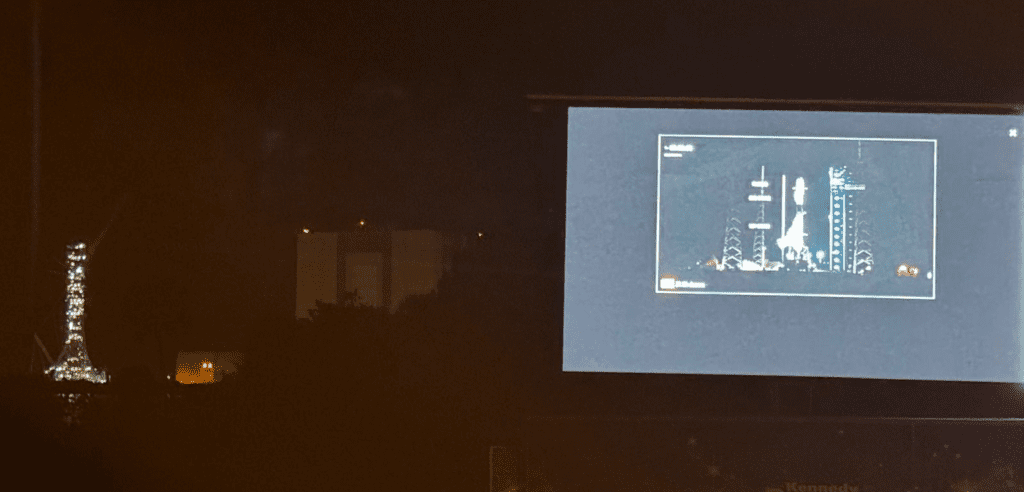
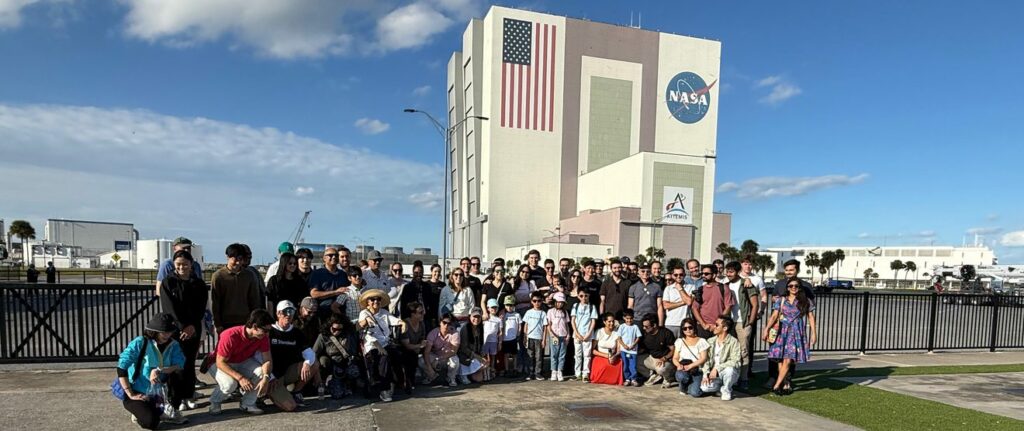
I was thrilled to join the team and fellow investors of our portfolio company in Cape Canaveral to witness the launch of Starcloud-1 the first step toward a new era of orbital computing.
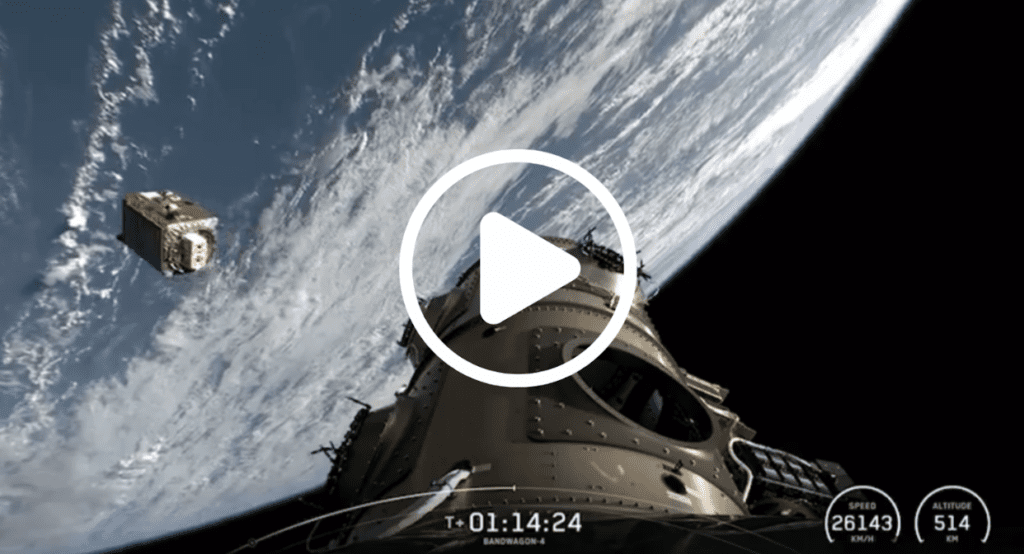
On November 2nd, aboard SpaceX’s Falcon 9 Bandwagon-4, Starcloud-1 separated from the upper stage and entered orbit. Now, 500 km above Earth, it’s running Google’s AI model on an NVIDIA H100 GPU the most powerful chip ever deployed in space delivering 100x more processing power than any prior orbital system. Just 21 months old, Starcloud is building the infrastructure to run AI workloads directly in orbit starting with satellite-to-satellite AI processing and progressing toward full space-based data centers powered by 24/7 solar, with no land-use, permitting, or cooling constraints.
We’re excited to be part of this journey alongside notable investors such as the Sequoia Scout Fund and Andreessen Horowitz scout funds.
The Problem
AI’s explosive growth has created an unprecedented demand for computing power, but Earth’s infrastructure is reaching its limits.
- Power grids are overloaded,
- cooling systems consume up to half of total energy,
- and land scarcity is constraining expansion.
Training frontier models already requires massive power GPT-4 consumed around 20 MW, equivalent to a small town’s electricity usage, while next-generation models like GPT-5 and GPT-6 could demand up to 1.5 GW, the output of a full nuclear reactor. Without a radical shift, the world won’t be able to supply the electricity AI requires.
Solution
Starcloud’s answer is to take compute off-planet building orbital data centers that leverage
- passive cooling in space,
- unlimited solar energy,
- and zero dependence on terrestrial grids.
By operating beyond Earth’s constraints, Starcloud can deliver scalable, carbon-free compute at a fraction of today’s cost.
The Team
Philip Johnston, CEO, is a second-time founder who has worked at McKinsey & Co. working on satellite projects for national space agencies. Philip has an MPA in National Security & Technology from Harvard University, an MBA from Wharton, an MA in Applied Mathematics & Theoretical Physics from Columbia University, and is a CFA Charter holder.
Ezra Feilden, CTO, has a decade of experience with satellite design, specializing in deployable solar arrays and large deployable structures. Ezra comes from Airbus Defense & Space (SSTL) and Oxford Space Systems, where he worked on missions including NASA’s Lunar Pathfinder. Ezra has a PhD in Materials Engineering from Imperial College London.
Adi Oltean Chief Engineer, was previously a Principal Software Engineer at SpaceX, where he was part of the Starlink network team enabling Starlink for in-motion users, including Starship. Before that, he deployed the first LLMs on large GPU production clusters at Microsoft, where he also delivered more than 25 patents in more than two decades. Adi holds degrees in Computer Science and Chemistry from the top two universities in Bucharest.
The Vision
Starcloud’s long-term goal is nothing less than to move the world’s compute infrastructure beyond Earth. Having proven that advanced AI can run in orbit, the company aims to build a new generation of data centers in space.In the decades ahead, Starcloud envisions a global compute layer in orbit, delivering clean, continuous, and scalable power for AI.
As Jeff Bezos recently commented on the future of space data centers: “One of the things that’s going to happen in the next… it’s hard to know exactly when, it’s 10+ years and I bet it’s not more than 20 years… we’re going to start building these giant gigawatt data centres in space… These giant training clusters will be better built in space, because we have solar power there, 24/7. There are no clouds and no rain, no weather. … We will be able to beat the cost of terrestrial data centres in space in the next couple of decades.”
You can watch the launch of Starcloud-1 below