I am excited to share that our portfolio company US-based StarCloud has just closed a $170M Series A at a $1.1B valuation, becoming the fastest Y Combinator company to reach unicorn status. The round was led by Benchmark and EQT Ventures, with participation from new investors including Macquarie Capital, the world’s largest infrastructure fund.
We first invested in StarCloud at Seed in early 2025, making this a remarkable Seed-to-unicorn journey in just over a year.
StarCloud is tackling one of the most important infrastructure bottlenecks in AI: the availability of power. As AI compute demand accelerates, terrestrial data center expansion is increasingly constrained by grid limitations, cooling overhead, and land scarcity across major hubs such as Virginia, Texas, and Frankfurt. The challenge is no longer access to chips or capital. It is access to scalable, affordable energy.
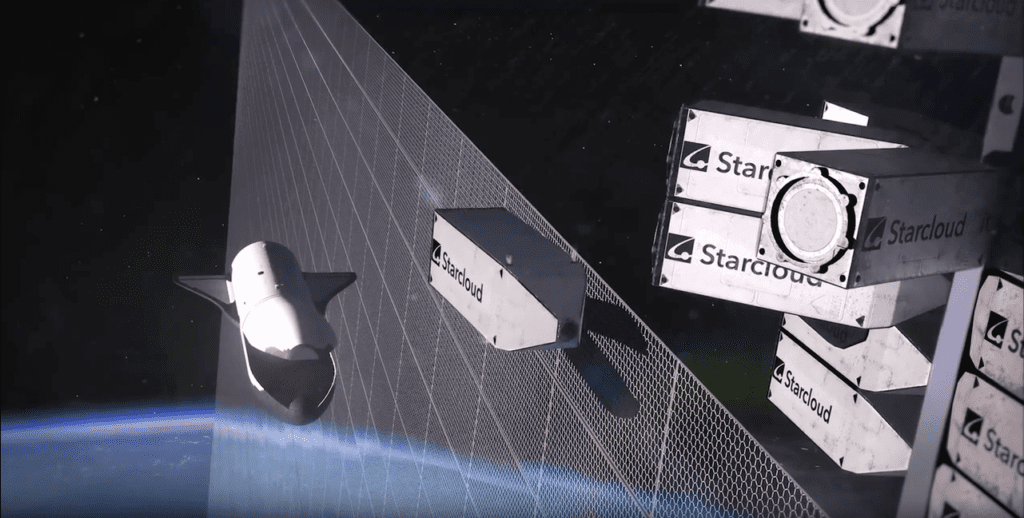
This is where StarCloud comes in. The company is building gigawatt-scale orbital data centers powered by continuous solar energy and passively cooled in the vacuum of space. By moving compute infrastructure into orbit, StarCloud aims to remove the core physical constraints that are now slowing AI infrastructure growth on Earth. The economics are compelling: the company targets energy costs more than 20x lower than terrestrial alternatives, with no cooling overhead and no dependence on the grid. A 40 MW orbital data center is projected to cost around $10M to build and launch, compared with roughly $140M in energy costs alone for a comparable Earth-based facility over four years.
The momentum is already building. On March 16, 2026, NVIDIA formally named StarCloud as a partner in its Space Computing platform for next-generation orbital missions. The company has also filed with the FCC for a constellation of up to 88,000 low Earth orbit satellites purpose-built as orbital data centers for AI workloads. Later this year, Starcloud-2 will launch carrying multiple GPUs, including an NVIDIA Blackwell chip, and will feature the largest deployable radiator ever flown on a private satellite. This mission lays the groundwork for Starcloud-3, which is projected to become the first orbital data center cost-competitive with terrestrial alternatives at approximately $0.05 per kWh.
The opportunity is enormous for StarCloud in what could become one of the defining infrastructure categories of the AI era.
We are proud to continue supporting this vision and look forward to the next phase of growth. Congratulations to CEO Philip Johnston, CTO Ezra Feilden, Chief Engineer Adi Oltean, and the entire StarCloud team on this extraordinary milestone.